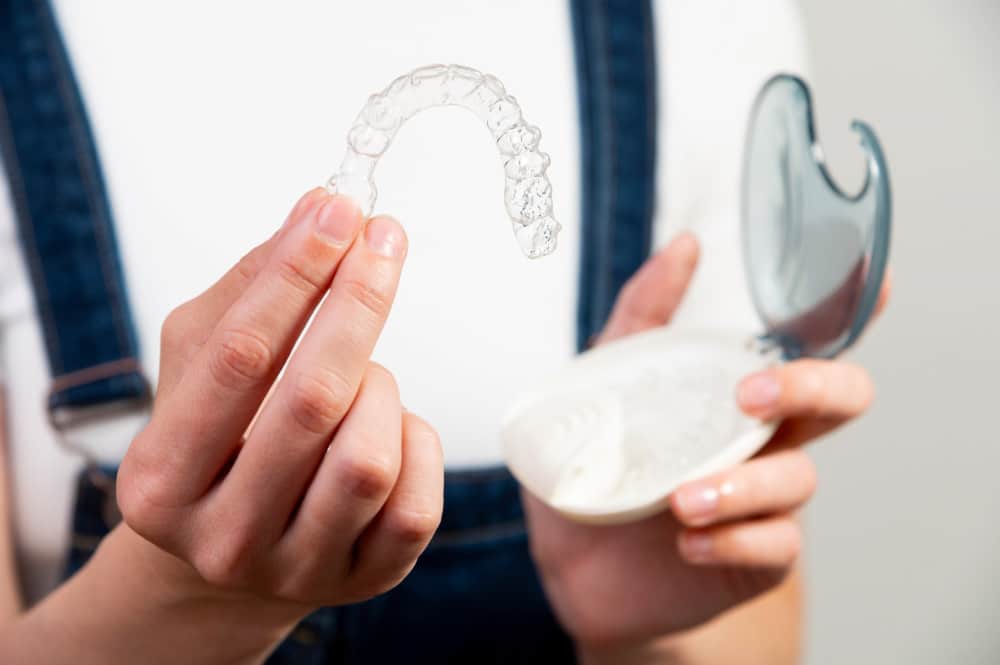
When most people think about retainers, they think of them as a simple way to keep their teeth straight after braces or aligners. If it stops fitting, it’s easy to assume the retainer is the problem.
But what many patients don’t realize is that a retainer is not an adaptable device. It is a precise snapshot of your teeth at a specific moment in time.
When that snapshot no longer matches your current smile, it means something has changed.
At Runnels Orthodontics, we help patients understand what those changes mean and how to respond before small shifts turn into larger concerns. Let’s explore why retainers stop fitting and what that tells you about your teeth, your bite and your long-term results.
Why Your Retainer Doesn’t “Suddenly” Stop Fitting
A retainer is designed to fit your teeth exactly as they were when treatment ended. That means even a small change in tooth position can affect how it fits.
Think of your retainer as a mold of your smile. If your teeth move, even slightly, that mold no longer lines up correctly.
A retainer cannot hold teeth in a position they no longer occupy. This is why a tight or ill-fitting retainer is not just inconvenient. It is an early sign that your alignment has started to change.
Why Your Teeth Continue to Move After Your Orthodontic Treatment
Tooth movement does not end when your braces or aligners are removed. Your teeth are supported by bone and periodontal structures that continue to remodel throughout your life.
Every day, small forces (from chewing, speaking and other normal functions) place pressure on your teeth. Those forces can gradually shift your teeth out of alignment. The American Association of Orthodontists explains that long-term retainer use is often necessary because teeth naturally tend to move over time.
Orthodontic treatment aligns your teeth. Retention maintains that alignment against ongoing biological change.
The Real Causes Behind a Retainer That No Longer Fits
When a retainer no longer fits, there is always an underlying reason. Identifying the cause determines the next step.
Inconsistent Retainer Wear
Even short gaps in wear allow your teeth to begin shifting. Movement can start quickly once retention is reduced.
Warping From Heat or Improper Storage
Clear retainers are sensitive to temperature. Heat exposure can distort the material, changing how it fits over your teeth.
Material Fatigue or Damage
Over time, small cracks or wear can alter the shape of your retainer. This affects how it engages each tooth.
Gradual Tooth Movement
Your teeth can shift slowly without noticeable symptoms until your retainer no longer fits.
Fixed Retainer Failure
Bonded retainers may loosen or detach without obvious signs. Retainer failures are relatively common and can lead to unwanted movement if left unaddressed.
Each of these causes leads to the same outcome: the retainer no longer matches your current tooth position.
Why Retainer Fit Matters For Long-Term Stability
A retainer that no longer fits is often the first sign that your alignment is beginning to change.
Even small shifts can affect how your bite functions. Your teeth may begin to contact unevenly, placing more pressure on certain areas and influencing how your teeth wear. These changes are often subtle at first. Many patients do not notice them until the retainer no longer fits.
Retention is an ongoing phase of orthodontic care. The goal is to preserve the alignment of your teeth and the balance of your bite created during treatment. Addressing any changes early may allow us to use more conservative solutions and helps prevent the need for more involved corrections later.
What to Do If Your Retainer No Longer Fits
At Runnels Orthodontics, maintaining your results is just as important as achieving them. Retainers play a critical role in protecting your alignment, and when something feels off, it’s important to understand why.
If your retainer no longer fits, feels tight, or has been damaged, our team will evaluate your current tooth position alongside the condition of your retainer.
From there, treatment is guided by what your teeth need. If your alignment remains stable, a new custom retainer can restore an accurate fit. Runnels Retainers are created using advanced 3D digital imaging and a durable, clear thermoplastic material that is both comfortable and discreet. Patients receive multiple sets, making it easier to stay consistent with wear-and-replace retainers as needed.
If the change is more significant, short-term orthodontic treatment may be recommended to restore alignment before returning to retention. Our goal is to support the long-term stability of your smile. By addressing changes early and using precise, modern technology, we help patients maintain their results with confidence.
If you’ve noticed changes in how your retainer fits, scheduling a consultation is the best way to understand what’s happening and how to move forward.
Take Action Early When Your Retainer Doesn’t Fit
A retainer that no longer fits is not unusual, but it should not be ignored. It is a sign that something has changed, whether that is your teeth, your retainer or both.
The sooner that change is evaluated, the more options you typically have. Small shifts can often be managed conservatively, while delays may lead to more involved correction.
If your retainer feels tight or does not fit the way it used to, scheduling an orthodontic evaluation is the most effective next step. This allows us to identify what has changed and recommend the right solution before the issue progresses.
For patients in Destin, Santa Rosa Beach, Rosemary Beach and nearby communities, Runnels Orthodontics offers the guidance and clinical care needed to protect your results. Contact us online or reach out directly by calling us at 850-257-7222 to schedule your consultation.